On Saturday, the usual suspects—me (annevoi), David (FifiBonacci), and Alastair (Mimring)—headed up to Henry Coe State Park to find another of the 100-Mile Hike caches. This one was our sixth. We need three more. But the likelihood of our getting them all before the hot days of summer is slim, since it looks like Alastair will be off to Tanzania soon for work.
Nonetheless: six down! three to go! We are making progress! This one was perhaps the longest hike in the series, 14 miles, with serious elevation changes. It was a workout. Yet we got all 42 of the caches we sought, so yay for that. However, we somehow forgot to note the keyword in the 100-Mile cache that was that day's object. Yikes! It was the whole reason we were out there, to get that one scribbled word!
Fortunately, the cache owner, Ullii/Julie, was most accommodating and surrendered the word (it was, aptly, "up") without us needing to beg. So we were left with a sense of accomplishment and many happy memories. Here are a few photos from the day:
Winter Pond: the cache is at the base of the post David is leaning on
Just some beautiful scenery: the newly leafing oaks were splendid!
The wildflowers were out too: here, vetch.
An oak. There was a cache here. Perfect place for one.
Mimring trying (in vain) to capture the glory of the wildflower-bedazzled setting.
Just lovely, no?
One thing I love about geocaching is that you tend to be lured off trail, to magnificent spots you wouldn't otherwise have visited.
New oak leaves. Late this year.
Sidalcea malviflora (“checker mallow”)
Up in a tree, cache in hand— does it get any better?
On our way back down. There's a cache in that tree on the left. Just saying.
Unfortunately, when we got back to our car, we found a ticket for $71.50—because in our eagerness to get on the hunt, we'd forgotten that this might be a fee area? Yeah. It was. Which makes every one of our 42 caches worth (...calculating...) $1.70. Next time I'll try to exercise more situational awareness. Dammit.
I have been cooking a lot more during the last year, and enjoying it—because when I do cook, it's because I want to. The last couple of weeks, though, I haven't felt like it. So we've had leftovers; or David has cooked; or we've "scrounged" (different from leftovers: more of an individualistic free-for-all—chips and salsa, good enough!). We've also gone out to eat, now that we're vaccinated. What a luxury!
But tonight, I was in the mood again. So I got out How to Cook Everything Vegetarian by Mark Bittman. Which I learned about not too long ago on an Ezra Klein podcast, where Ezra and Mark talked about our modern food system, and what's wrong with it. (So much.) When asked what cookbook Bittman would recommend for vegetarian cooking, well, guess what he recommended? But since he'd recommended books by other authors for other specialties, I thought, hmm, might be worth checking out. I am trying to eat more vegetables, after all.
And yes: I love Bittman's book. Not simply because he offers a wealth of knowledge and good recipes, but also because he offers variations on those recipes. Each recipe becomes three or five or more. He teaches you how to improvise, in effect. How to think more creatively about food.
Here's what I made tonight:
Cannellini Beans with Cabbage and Pasta
Salt 1/2 head cabbage, preferably Savoy, cored and chopped 8 ounces cavatelli, conchiglie, or orecchiette 2 tablespoons olive oil or butter 1 large or 2 medium leeks, including some green parts, rinsed and thinly sliced (about 2 cups) 1 celery stalk, chopped 2 sprigs fresh thyme 1/4 cup dry white wine (optional) 1 cup vegetable stock 3 cups cooked or canned cannellini beans, drained (can also use pinto or chickpeas) Pepper Freshly grated Parmesan or pecorino Romano for garnish (optional)
1. Bring a large pot of salted water to a boil over high heat. Add the cabbage and cook until just tender, 3 to 4 minutes. Use a slotted spoon or a small strainer to fish it out; drain and set aside. When the water returns to a boil, add the pasta and cook until tender but firm, 7 to 8 minutes, then drain. 2. Meanwhile, put the oil in a large skillet over medium heat. When it's hot, add the leeks and celery and cook until softened, 5 to 6 minutes, stirring occasionally. Add the thyme and the wine if you're using it, and cook for another minute, until the pan is almost dry. Add the stock, beans, and reserved cabbage. Sprinkle with salt and pepper and cook until the flavors blend and everything is well heated, about 5 minutes more. 3. Add the drained pasta to the skillet and stir gently. Taste and adjust the seasoning, sprinkle with Parmesan cheese if you're using, and serve.
(The variations involve spinach, chickpeas, and perhaps raisins.)
Anyway, the recipe was so delicious that I went back for seconds—something I rarely do. Maybe I just wanted more cheese. But I don't think so. It really was good. Simple but oh so springtime tasty.
I already have a shopping list to make more vegetable stock (this might become a new Sunday ritual) and a smoky eggplant zucchini soup. Just typing that makes my mouth water.
Here is Mark Bittman giving a TED talk, all the way back in 2008, about what's wrong with how we eat:
I am trying to get better about how I eat.... Home cooking is a good start. So are vegetables.
22. Gail Honeyman, Eleanor Oliphant Is Completely Fine (2017) (4/15/21)
I picked this book up because of a five-star review by a writer I respect. I must say, I was disappointed. Although the title character is, as all the adoring critics say, quirky and funny and, in the end, lovable (if not a bit judgy as well), the story itself leaves much to be desired: it is too pat, strangely naive. I saw the twist at the end coming from early on, and I found the way Eleanor simply quits a years-long heavy-drinking habit like that and comes to terms with a tragedy from her past as if it was a bee sting entirely unbelievable.
But yes, I liked Eleanor, who is characterized by extreme loneliness, which makes her a social misfit, unable to anticipate social niceties or read people. Therein lies much of the humor. She also has a great vocabulary. I liked the friendship between her and an office co-worker, Raymond: they complement each other nicely. Eleanor is game to try new things, speaks her mind, is unafraid: all admirable qualities.
The story isn't much: it's basically about 29-year-old Eleanor, who lives in Glasgow, reconnoitering reality—hopes and dreams, old traumas, new promises—after having spent her adolescence as a foster child, been in an abusive relationship at uni, and then lived the decade of her adulthood in extreme isolation. She works in an office, and on the weekends she holes up with two big bottles of vodka and eats pesto pasta. I suppose over the course of the book she does develop from being "just fine" to opening up to bigger (emotional) possibilities in life. The joke (such as it is) of her misfitness can't be sustained, however, so it's a relief when she seeks therapy toward the end and realizes a few things about herself, even if her "recovery" happens too quickly and easily.
Here is an example of her wisdom, which, again, strikes me as just a tad too . . . something: clichéd? too wise for someone with zero social skills? contradictory of the game way she embarks on new relationships? I don't quite believe it, and yet I also do. I can identify. Anyway, here she is at a funeral reception:
This was an all too familiar social scenario for me: standing alone, staring into the middle distance. It was absolutely fine. It was absolutely normal. After the fire, at each new school, I'd tried so hard, but something about me just didn't fit. There was, it seemed, no Eleanor-shaped social hole for me to slot into. I wasn't good at pretending, that was the thing. After what had happened in that burning house, given what went on there, I could see no point in being anything other than truthful with the world. I had, literally, nothing left to lose. But, by careful observation from the sidelines, I'd worked out that social success is often built on pretending just a little. Popular people sometimes have to laugh at things they don't find very funny, do things they don't particularly want to, with people whose company they don't particularly enjoy. Not me. I had decided, years ago, that if the choice was between that or flying solo, then I'd fly solo. It was safer that way. Grief is the price we pay for love, so they say. The price is far too high.
My friend listened to the book, which features Scottish accents. Maybe I would have liked it better if I'd heard it? Entirely possible. I didn't dislike it. I'm just not as crazy about it as so many reviewers seem to be. I gave it three stars on Goodreads, meaning "I liked it."
21. Sarah Stewart Taylor, The Mountains Wild (2020) (4/9/21)
I love a good mystery. This, however, was not one of them. At first, I found it too slow. Later, as plot twists started crowding in, the word "preposterous" kept leaping to mind. The writing itself is rather pedestrian (any character being described as tired-looking—and many were, because, oh, those police officers work hard—had a "gray face," "lined eyes," and "wrinkled clothing"). Although there are many descriptions of Dublin and the Wicklow Mountains, where most of the story takes place, they somehow never crystallized into actual, relevant places for me. It was totally unbelievable that there would still be frantic television news accounts, pretty much whenever a character encounters a TV, on a missing woman over two weeks after she disappeared. When the narrator runs into a love interest on a beach while she's out for a run, it's almost magically random. The main Irish detective alwaysseemed to be "holding something back."
But anyway, the story: it is 2016, and Maggie, a 40-something police detective in Long Island, departs for Ireland when a clue surfaces that potentially links a newly missing young woman to Maggie's own cousin, Erin, who disappeared 23 years earlier. Possible connections to several other women, over the years vanished then discovered dead, are posited. Irish history, especially concerning the IRA, is invoked, and Irish gangsterism. Family mysteries and legacies come into play. A buried skeleton is discovered—and Erin's ID card. But the skeleton is not Erin.
The story bounces back and forth in time between 1993, when Maggie first went over to see what she could learn immediately after Erin's disappearance, and 2016. Maggie and Erin resembled each other, so whenever Maggie first meets someone who knew Erin, in whichever time frame, she is met by a "shocked" (or occasionally "frightened"), then "confused" look. Characters are introduced who seem to have had but the most glancing of relationships with Erin—but maybe they killed her? Or maybe they ran off with her, who knows?
Throughout, we are treated to italicized interludes that narrate Maggie and Erin's youth, back when they were close as sisters, before "everything went wrong." Which I suppose, according to jacket blurbs, give the book its "incredible tenderness and emotional accuracy."
Ultimately, everything is sorted out, with a final, and completely out-of-the-blue, twist. I don't mind a good twist, or some (not too much) suspension of disbelief, but this one... nah.
Perhaps if the same story had been in more deft hands, it might have worked. But I doubt it. In any case, I will not be seeking Sarah Stewart Taylor out again.
20. Elizabeth Bradfield, Toward Antarctica: An Exploration (2019) (4/6/21)
I started this book last year as I was heading to Antarctica. But I didn't get far. Although it is beautiful— beautifully written, beautifully illustrated—I did not have the context to appreciate it fully. In some ways I still don't, because this book, which consists of short almost–journal entries, is very much about the author's personal experience.
Bradfield is a poet and a naturalist, and Toward Antarctica provides us with snapshots, in both words and images, of several voyages she has made to the southern continent, South Georgia Island, and the Falklands as staff on a tourist ship. In it, she adopts a form originated by the seventeenth-century Japanese poet Bashō known as haibun, which combines prose and haiku. Though "prose" isn't quite accurate, for her style is quite telegraphic, requiring the reader to slow down and savor (or, sometimes, puzzle). For example,
A gift. This. Unfair to claim & there were others and yet this gift: a minke exhales, unseen but heard. Spot its dorsal sharp among ice, in calm-silk water. Then along and under (under) my boat, eye skyward. Sea-warbled but clear. Open. Met. Calm water. Flank gold with diatoms. Still. Chunks of ice. Enough time enough weather enough whale enough boats for all on ship to muster, seek, find and not crowd. To drift as it circles, approaches, finds us approachable, re-approached. All balance, all sense, recalibrated.
stretched on low ice ignored in near distance a leopard seal yawns
Frequently, she also includes a footnote to clarify some historical point or other allusion within her entry. The layout is elegant, as are the (sometimes rather abstract) photographs:
My experience aboard a ship in Antarctica was different from Bradfield's, both because I wasn't staff and because our ship was very small, intimate, and we had a lot of flexibility. So I got the most out of her observations about wildlife and the places that I, too, visited: Port Lockroy, Neko Harbor, Half Moon Island, the Gerlache Strait.
I also appreciated her epilogue, "A Letter Home," in which she asks: "Where do we source our information and how do we scrape down to the truth? How are we going to agree and make a plan to move forward, America, on this one subject in our own crowded, conflicted, contradictory, not-wholly-known land? There are so many subjects about which we are asking these questions."
This book prompted me to pull out my maps of Antarctica and recall our trip with all its glorious landings and Zodiac rides, seeing penguins, seals, whales. Now, perhaps, I should finally get around to curating the photos I took down there, and posting them. I relish the thought of a return visit, even if it is only via a screen.
Do I recommend this book? It's hard to say. As I mentioned above, I couldn't appreciate it until I myself had been to the land she describes. Even the sections about South Georgia and the Falklands were a bit of a stretch for me, though I've read about these places and seen photos, so that helped. It is a beautiful book, but it may in the end be of only limited accessibility.
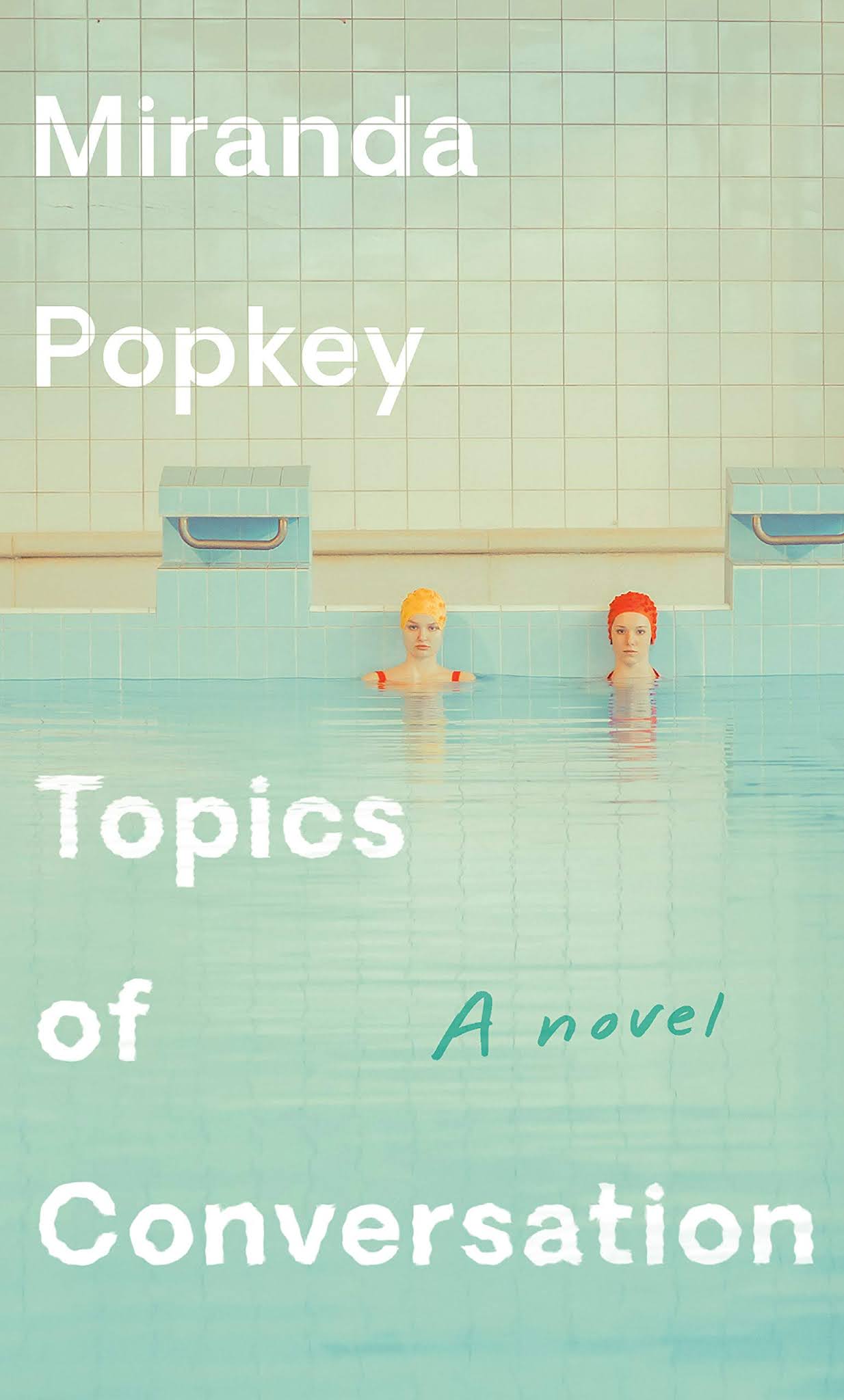
19. Miranda Popkey, Topics of Conversation (2020) (4/5/21)
This is another in a series of books I've read lately by smart women with a contemporary literary style of experimentalism. Think Jenny Offill, Eula Biss, or perhaps especially Rachel Cusk with her mostly nameless narrator (as here) who engages in illuminating conversations (ditto, somewhat).
I picked this one up because Merriam-Webster, the dictionary, is starting a "book thing," and this is their first choice. "Edgy, wry, and written in language that sizzles with intelligence and eroticism," they say, "this novel introduces an audacious and immensely gifted new novelist."
Well, maybe. I definitely appreciated (much of) the writing skill and the edginess of the subject matter. I did not, however, fall anywhere near in love, or even like, with the narrator or her friends, family, and acquaintances.
The book plays out over 17 years, starting with a conversation in Italy when the 21-year-old narrator is nannying a 40-something's 7-year-old twins, and the mother tells a story about an earlier love affair that wasn't all nice. That sets the tone for the following nine chapters, which move forward chronologically and back to the U.S.—mostly California, here and there. And yes, many of the subsequent chapters also have to do with sex, control, desire, shame, yearning, as told in conversations, or rather, usually, monologues. It's the story, I guess you'd say, of the narrator's grappling with "what it all means." How to find one's center. How to move forward, if that's even possible. It's bold, and not always comfortable. Or successful.
Although I didn't especially like the book, I guess I'm glad I read it. I can't quite put my finger on what the problem was with the narrator and those she had conversations with. The brutal honesty didn't lead to revelations? The self-loathing didn't lift? It was all too heady and calculated, without enough heart? The narrator knew she was "the smartest one in the room"? Overall, there was a harshness to the lessons learned that I didn't find redemptive. Though then again, maybe that's just life? We don't actually live in a fictional universe where all the threads get pulled together.
Oh, and in the first eight chapters alcohol is a consistent crutch. That doesn't help.
At the very end, the last chapter or two, I finally got a sense that the narrator might—after having become a mother—actually have softened and discovered some agency, so I did finish the book feeling some relief. But it felt like too little too late.
For the quotation that I like to include in my reports, here's this, which gets at the overall sourness, though here it's also a little sad. She's talking with her mother, who has just bought a jade plant and several bouquets:
"Leads on any jobs?" [her mother asks]. I shrugged again. It's the flowers I hate, fresh bunches almost every day, tossed, fine, composted, before any hint of wilt, like bright blooms aren't a luxury, like they're some kind of need. When we argue about the flowers, the arguments I make are about waste and about money, valid arguments both. Though in fact what I hate about the flowers is that they are, for my mother, a source of pleasure, that my mother believes in allowing herself pleasure, in indulging her various material desires. What I hate about the flowers is that they are an example of the many ways in which my mother extends her kindness also to herself.
I most likely won't be picking up Popkey again . . .
Perhaps because I am shockingly unfamiliar with Greek mythology (or virtually any mythology except Norse), I found this reformulation of aspects of the ancient stories—the rivalry between the Titans and the Olympians, the hierarchies of the gods, Odysseus's journey home from the Trojan wars—just splendid. I have of course encountered the names, and this book gave me more of a framework into which to fit them.
At its center is the minor goddess Circe, an immortal, daughter of Helios and the nymph Perse, granddaughter of Oceanus. When she dares to push her powers by transforming a fisherman she has fallen in love with into a god, and a nymph whom she sees as a rival into a six-headed monster, she is banished, forever, to a remote island. But she is not totally isolated: the mischievous god Hermes pays her visits (and keeps her apprised of goings-on in the greater world); bad-girl nymphs are sent to her isle for punishment and become her helpers; and seafarers sometimes sail into her bays. Including Odysseus about halfway through the book, when the plot really picks up its pace.
Circe is also, like her mother and her siblings, a witch, and as she settles into her life apart, she comes to master skills—potions and spells—that she had but stumbled onto before. Transformation is her special gift, as when she makes pigs of sailors who get unruly. She has this to say about being a witch:
Let me say what sorcery is not: it is not divine power, which comes with a thought and a blink. It must be made and worked, planned and searched out, dug up, dried, chopped and ground, cooked, spoken over, and sung. Even after all that, it can fail, as gods do not. If my herbs are not fresh enough, if my attention falters, if my will is weak, the draughts go stale and rancid in my hands. By rights, I should never have come to witchcraft. Gods hate all toil, it is their nature. The closest we come is weaving or smithing, but these things are skills, and there is no drudgery to them since all the parts that might be unpleasant are taken away with power. The wool is dyed not with stinking vats and stirring spoons, but with a snap. There is no tedious mining, the ores leap willing from the mountain. No fingers are ever chafed, no muscles strained. Witchcraft is nothing but such drudgery. Each herb must be found in its den, harvested at its time, grubbed up from the dirt, culled and stripped, washed and prepared. It must be handled this way, then that, to find out where its power lies. Day upon patient day, you must throw out your errors and begin again. So why did I not mind? Why did none of us mind? I cannot speak for my brothers and sister, but my answer is easy. For a hundred generations, I had walked the world drowsy and dull, idle and at my ease. I left no prints, I did no deeds. Even those who had loved me a little did not care to stay. Then I learned that I could bend the world to my will, as a bow is bent for an arrow. I would have done that toil a thousand times to keep such power in my hands. I thought: this is how Zeus felt when he first lifted the thunderbolt.
I enjoyed thinking about the different lots of immortals and mortals, which play out in very real ways in this story. I enjoyed the range of affects and motivations, from cruelty to kindness, hope to resignation, selfishness to compassion. The Fates are a constant thread.
I enjoyed the language of the book too, which has a dignified presence befitting a goddess. It is slightly formal, yet always vivid in terms of detail and emotion.
Circe isn't about plot per se, but about what moves us and drives us forward, whether we're a mortal soon to die or a god destined to be around for centuries. In many ways, we're not so different.