Friday, July 12, 2024

11 of 100: Helga Stentzel, artist of whimsy

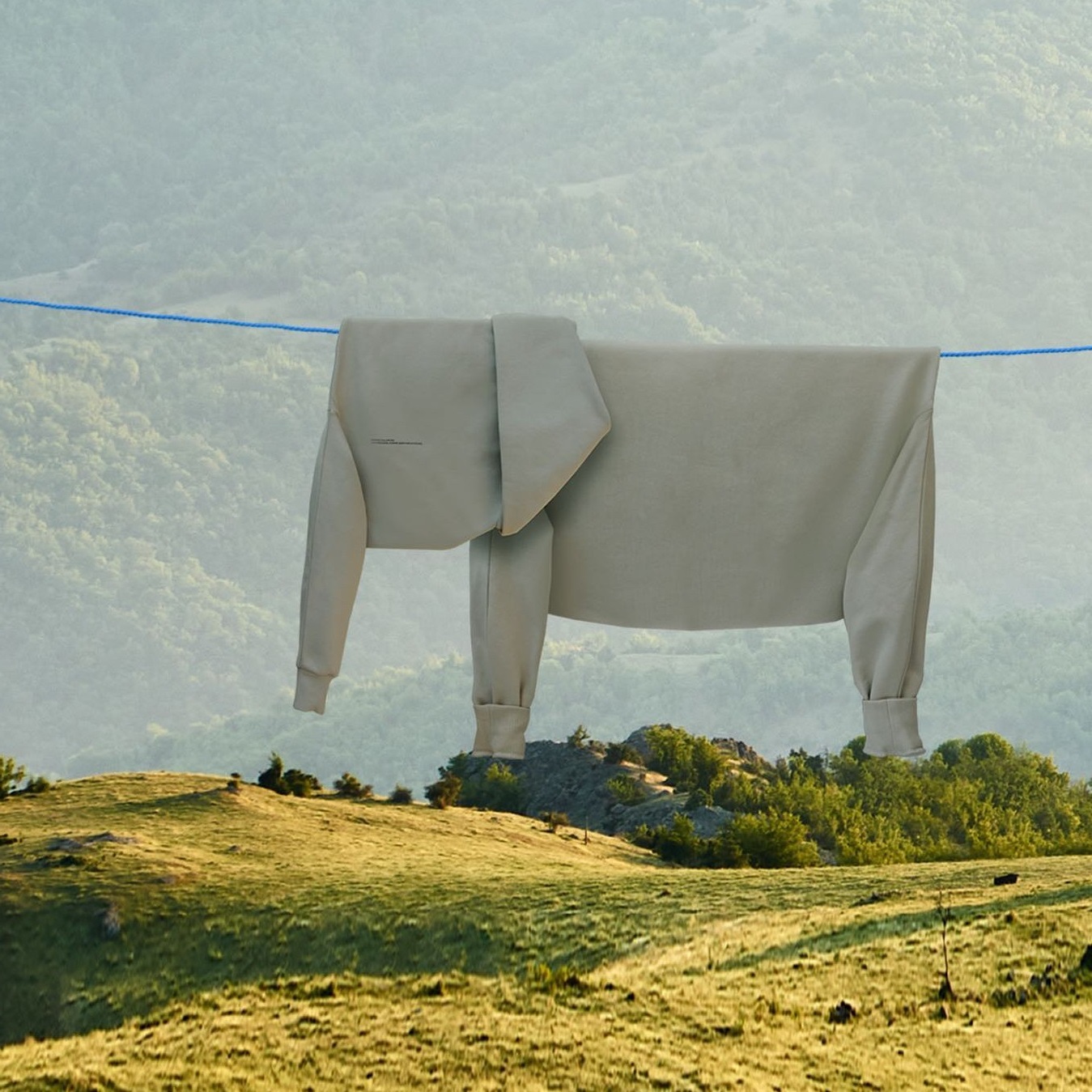
Just a few photos to bring a smile today. These are by the Siberian-born, London-based artist Helga Stentzel, whose laundry-line animals I've seen on Facebook, but who has a few other series as well: edible creatures, food for thought, laundry faces, home play. Here are a few examples from each:

Laundrosaurus

Elephant

Camella

Inky

Smoothie

Zelda

Choco-Snack

Spaghettiman

Wiggly Snack

Self-contained

Eggzotic

Monster House

Lighten the Load

DIY Flip-flops

10 of 100: Shakespeare songs

Last night I went to a kickoff concert of the upcoming Carmel Bach Festival, two weeks of wonderful music, this year featuring Bach's St. John Passion and two Beethoven symphonies, the Fifth and the glorious Ninth with its Ode to Joy, among so much other fabulous fare. 

This concert featured the Chorus, made up of local singers—the first time they've gotten their own showcase (if you don't count the outdoor, twenty-minute "Tower Concert" that precedes the Monday-evening main event, and that only started last year). It was great! It featured music set to the words of Shakespeare, and it was all new to me. 

I especially enjoyed the work of a composer I'd never heard of who has spent his career devoted to Shakespeare, Matthew Harris (b. 1956). He apparently enjoys turning to all manner of music traditions for inspiration. Here is a video, featuring the Pacific Lutheran University Choir in 2020, of three of those songs of his, two of which, the first and the last, the Chorus performed last night. The last one definitely had me tapping my toes. 

They also performed a couple of songs composed by the British jazz pianist George Shearing (1919–2011), which were delightful in a different, jazzy way. And here's a longer video of such, performed by the City of London Choir at St. Giles Cripplegate Church in June 2021 (just as pandemic restrictions were loosening—I bet people were glad to be there among such joyful sounds):

I am now looking forward to the next two weeks of music. Especially the Ode to Joy, which we can no doubt use more of these days...


Wednesday, July 10, 2024

9 of 100: Kaua'i from the air

I was going to simply post some Flickr photos from July 10s past—as I do when I have nothing in particular to say—when I found this shot ☞ , which on its own isn't all that interesting, but in the Flickr caption I provide a link to a photo that David took from that very helicopter of Tunnels Beach, Kaua'i. And when I went to David's site, I found that he had actually taken a bunch of photos on that aerial tour. So... here they are, for a bit of tropical island beauty. These are all from 2008: sixteen years ago today. Crazy.

Mt. Namolokama

reefs

Honopu—Valley of the Lost Tribe

Along the Na Pali Coast

Waimea Canyon

Tunnels Beach

Hanakapi'ai Valley

Na Pali Coast

Waimea Canyon

Me and our pilot, Jesse Darr


Tuesday, July 9, 2024

8 of 100: Als das Kind Kind war, by Peter Handke

As I mentioned the other day, we own the DVD of the Wim Wenders movie Wings of Desire. And we watched it again the other night. It is such a beautiful expression of humanity and yearning.

The Nobel Prize–winning novelist and playwright Peter Handke is credited as co-author. I do not know what hand he had in the film overall, but he is certainly responsible for the following poem, "Als das Kind Kind war"—When the child was a child—which punctuates the story. Listen to Bruno Ganz and others recite it in the movie (the following video being a compilation—and subtitled in Greek, so if you don't speak German [or Greek], you'll have to follow along with the translation below):

Here are the words, in both German and English translation.

Lied vom Kindsein

Als das Kind Kind war,
ging es mit hängenden Armen,
wollte der Bach sei ein Fluß,
der Fluß sei ein Strom,
und diese Pfütze das Meer.

Als das Kind Kind war,
wußte es nicht, daß es Kind war,
alles war ihm beseelt,
und alle Seelen waren eins.

Als das Kind Kind war,
hatte es von nichts eine Meinung,
hatte keine Gewohnheit,
saß oft im Schneidersitz,
lief aus dem Stand,
hatte einen Wirbel im Haar
und machte kein Gesicht beim fotografieren.

Als das Kind Kind war,
war es die Zeit der folgenden Fragen:
Warum bin ich ich und warum nicht du?
Warum bin ich hier und warum nicht dort?
Wann begann die Zeit und wo endet der Raum?
Ist das Leben unter der Sonne nicht bloß ein Traum?
Ist was ich sehe und höre und rieche
nicht bloß der Schein einer Welt vor der Welt?
Gibt es tatsächlich das Böse und Leute,
die wirklich die Bösen sind?
Wie kann es sein, daß ich, der ich bin,
bevor ich wurde, nicht war,
und daß einmal ich, der ich bin,
nicht mehr der ich bin, sein werde?

Als das Kind Kind war,
würgte es am Spinat, an den Erbsen, am Milchreis,
und am gedünsteten Blumenkohl.
und ißt jetzt das alles und nicht nur zur Not.

Als das Kind Kind war,
erwachte es einmal in einem fremden Bett
und jetzt immer wieder,
erschienen ihm viele Menschen schön
und jetzt nur noch im Glücksfall,
stellte es sich klar ein Paradies vor
und kann es jetzt höchstens ahnen,
konnte es sich Nichts nicht denken
und schaudert heute davor.

Als das Kind Kind war,
spielte es mit Begeisterung
und jetzt, so ganz bei der Sache wie damals, nur noch,
wenn diese Sache seine Arbeit ist.

Als das Kind Kind war,
genügten ihm als Nahrung Apfel, Brot,
und so ist es immer noch.

Als das Kind Kind war,
fielen ihm die Beeren wie nur Beeren in die Hand
und jetzt immer noch,
machten ihm die frischen Walnüsse eine rauhe Zunge
und jetzt immer noch,
hatte es auf jedem Berg
die Sehnsucht nach dem immer höheren Berg,
und in jeder Stadt
die Sehnsucht nach der noch größeren Stadt,
und das ist immer noch so,
griff im Wipfel eines Baums nach dem Kirschen in einem Hochgefühl
wie auch heute noch,
eine Scheu vor jedem Fremden
und hat sie immer noch,
wartete es auf den ersten Schnee,
und wartet so immer noch.

Als das Kind Kind war,
warf es einen Stock als Lanze gegen den Baum,
und sie zittert da heute noch.

Song of Childhood

When the child was a child,
it walked with its arms swinging,
wanted the brook to be a river,
the river to be a torrent,
and this puddle to be the sea.

When the child was a child,
it didn’t know that it was a child,
everything was soulful,
and all souls were one.

When the child was a child,
it had no opinion about anything,
had no habits,
it often sat cross-legged,
took off running,
had a cowlick in its hair,
and made no faces when photographed.

When the child was a child,
it was the time for these questions:
Why am I me, and why not you?
Why am I here, and why not there?
When did time begin, and where does space end?
Is life under the sun not just a dream?
Is what I see and hear and smell
not just an illusion of a world before the world?
Given the facts of evil and people.
does evil really exist?
How can it be that I, who I am,
didn’t exist before I came to be,
and that, someday, I, who I am,
will no longer be who I am?

When the child was a child,
it choked on spinach, on peas, on rice pudding,
and on steamed cauliflower,
and eats all of those now, and not just because it has to.

When the child was a child,
it awoke once in a strange bed,
and now does so again and again.
Many people, then, seemed beautiful,
and now only a few do, by sheer luck.

It had visualized a clear image of Paradise,
and now can at most guess,
could not conceive of nothingness,
and shudders today at the thought.

When the child was a child,
it played with enthusiasm,
and, now, has just as much excitement as then,
but only when it concerns its work.

When the child was a child,
it was enough for it to eat an apple, bread,
and so it is even now.

When the child was a child,
berries filled its hand as only berries do,
and do even now,
fresh walnuts made its tongue raw,
and do even now,
it had, on every mountaintop,
the longing for a higher mountain yet,
and in every city,
the longing for an even greater city,
and that is still so,
it reached for cherries in topmost branches of trees
with an elation it still has today,
has a shyness in front of strangers,
and has that even now.
It awaited the first snow,
and waits that way even now.

When the child was a child,
it threw a stick like a lance against a tree,
and it quivers there still today.

Monday, July 8, 2024

7 of 100: Binomial nomenclature

Up until this morning, I thought very little about binomi(n)al nomenclature—the system whereby living things are "specifically" identified using two names derived from Latin and Greek. Except that it's useful, and often entertaining.

The coast live oak outside my window? It's Quercus agrifolia, of course! From the Latin, meaning Oak + sharp-leaved. Named, no doubt, by the "father of taxonomy" Carl Linnaeus himself!

But then I started researching a lovely orchid I ran across on Facebook yesterday, Pogonia ophioglossoides, the snakemouth orchid, aka rose or fragrant pogonia (it smells like raspberries!). (At least, that's what I thought it was—but see below.) When I checked out its classification—kingdom, clade, order, family, subfamily, genus, species—I noticed that P. ophioglossoides is only its most recent name. It's had others, beginning, yes, with Linnaeus—Arethusa ophioglossoides L. (its "basonym")—and followed by A. parvifolia Michx. (André Michaux) and P. pendula Lindl. (John Lindley). The current name is followed by the designation Ker Gawl., standing, I learned, for the Englishman John Bellenden Ker (c. 1764–1842), an orchid specialist who published several books and described many species, including this one.

What's with all these names? And what about that coast live oak? Well, ha! At least its six synonyms all agree that it's in the genus Quercus, but beyond that, all bets are off. And, no surprise, Linnaeus apparently never even heard of this tree, otherwise wouldn't he have given it a name too?

This all took me down the rabbithole of nomenclature, beginning with binomialism itself, first formalized by Linnaeus in his 1753 publication Species Plantarum and extended to zoology in 1758 with his Systema Naturae, 10th ed. Clicking links took me to discussions of synonyms, which are treated differently in botany and zoology (I will spare you the details); botanical names, which must conform to International Codes of Nomenclature; the difference between botanical and zoological nomenclature (including that the latter may repeat terms—e.g., Bison bison—while the former may not). And so much more. 

Actually, I arrived at this topic by venturing one click away from P. ophioglossoides. I thought I'd take a look at orchids generally, to see how big a family it is. (Turns out it's one of the two largest families of flowering plants, with about 28,000 currently accepted species spread across 763 genera.) And there I saw this: Family Orchidaceae Juss.

And I thought, what is this Juss.? And where is L.?

That's how I fell down the rabbithole. Four simple letters—standing for Antoine Laurent de Jussieu (1748–1836), who was the first to publish a natural classification of flowering plants. "Natural" being the key word here, as opposed to Linnaeus's "artificial" system: whereas Linnaeus looked at just a few morphological characteristics, such as number of stamens and pistils, Jussieu took into account a greater number of traits, including how they are expressed among plants generally. As he put it, plant characteristics should be "pessés et non comptés"—weighed and not counted. He then organized plants into three different groups—acotyledons (having no distinct embryonic leaves, such as ferns and mosses), monocots (having one, such as garlic, coconut, wheat, and orchids), and dicots (having two—most flowering plants), which he further divided into 15 classes and 100 families.

That Juss.? It's included—along with hundreds of others, among them L., Michx., Lindl., and Ker Gawl.—on an "incomplete" (but still plenty long) list of botanists by author abbreviation. Now when I look at a list of synonyms/former names of specific species, I will undoubtedly see those designations, whereas until this morning I (apparently!) skipped right past them.

Incidentally, when I started researching this entry, I googled the name the photographer had used in his FB post, "fragrant pogonia," and ended up with the species discussed above. But I wondered why none of the Google photos included three long red streamers that I had found particularly winning in the FB shot. I went ahead and wrote the above, but those streamers niggled at me. So I went back to FB and searched again. And discovered that I'd gotten it wrong: yes, the person who posted the photo called it fragrant pogonia—that much I'd remembered correctly, though it's also called coastal plain pogonia; but the specific name was different: Cleistesiopsis oricamporum P.M.Br. (P.M.Br. standing for P. M. Brown, who originally published this species, in 2009, and who is not on the above list, proving that it is, indeed, incomplete). And right there you have the reason for binomial nomenclature, as opposed to "common" names (and I therefore celebrate my error as a case in point!). This specimen was photographed in 2016 by Roger Hammer in Apalachicola National Forest, Florida. Isn't it gorgeous? 

And now I've definitely rambled on long enough. I may return to binomialism later—I happen to enjoy parsing all those Greek/Latin names (Pogonia ophioglossoides, in case you were wondering—and I'm sure you were—means Beardlike + Snake-tongue), plus it's a huge, fascinating topic: how we parse our very world. And here I thought today I'd just learn a little something about a pretty pink orchid with a sweet smell!

Sunday, July 7, 2024

Book Report: All the Sinners Bleed

10. S. A. Cosby, All the Sinners Bleed (2023) (7/7/24)

This is Cosby's third book (I reported on the other two here and here), and it's a doozy—but I've grown to expect that from this writer, with his complex plots and imperfect, striving protagonists.

This story, set in coastal Virginia, begins with two killings: first, of a well-liked geography teacher at the Charon County high school, and then of his killer, a young Black man who is spouting religious mumbo-jumbo, clearly out of his head. It turns out, the teacher had his (very) dark side—and there is yet another man who, as events play out, appears to be responsible for many, many murders of Black youngsters. Into this morass strides our hero, Sheriff Titus Crown, who has demons of his own from his time as an FBI agent. As a Black man, he also suffers the racism of this very Southern locale. In the course of his investigation we meet various characters—uppity good ol' boys, various ilks of preachermen, Titus's love interests both present and past, his father and brother, a local county supervisor, Titus's own deputies—all of whom fill in the complicated nature of this rural county. (Though I did sometimes grow confused as to who was who, there were so many characters.)

As with Cosby's other books, it's a mystery/thriller, but it's also much more than that. Titus has a strong moral center, but he is also a flawed human being, and both those sides play against each other. That is what Cosby does so well.

Here's a passage I flagged, a conversation between Titus and his girlfriend, Darlene:

     "I guess a lot of people are scared. Not just people that voted against me," Titus said.
     "Daddy getting those shells ain't like him saying he don't think you gonna catch this guy, Titus. But this is Charon. Stuff like this doesn't happen a lot. People don't know what to do," Darlene said.
     "I'm so sick of people saying 'this is Caron' like everyone around here is a goddamn virgin and no one has ever stepped on a sidewalk crack or stole a grape from the Safeway. Let me tell you something I learned in the Bureau. Doesn't matter where you are from or where you live, people are people. They can be jealous or hateful or twisted and sick. They steal and they lie, and lie about stealing. They fuck each other's husbands and wives or sons and daughters. They go to church every Sunday and hoot and holler about brotherhood and living in Christ, then they come right out and call you or me a porch monkey before they go home to beat their kids. Then have the nerve, the unmitigated audacity, to point at somebody else, at some other town, and say, 'No, those are the sinners, those are freaks, not us, not Charon.'"
     "Titus, I didn't—" Darlene tried to say, but Titus ignored her.
     "Flannery O'Connor said the South is Christ-haunted. It's haunted, all right. By the hypocrisy of Christianity. All these churches, all these Bibles, but it's places just like Charon where the poor are ostracized. Where girls are called whores if they report a rape. Where I can't go to the Watering Hole without wondering if the bartender done spit in my drink. People say this kind of thing doesn't happen in a place like Charon. Darlene, this kind of thing is what makes places like Charon run. It's the rock upon which this temple is built," Titus said. He tossed back the rest of his drink and stomped into the kitchen.


Saturday, July 6, 2024

6 of 100: End-of-the-trail libations

Just a quick little something today because I have nothing substantive, plus I made this yesterday and I have nowhere else to put it. It references the walk my friend Lynn and I did across England in May—a chronicle of sorts of our end-of-the-trail beers (me) and gin & tonics (Lynn), or at least all I managed to remember to shoot a picture of. Plus the one pot of tea, in Patterdale. And (center shot) our infinite games of Rummikub, using two miniature decks of cards. Good times!