Thursday, September 7, 2017

Hodgepodge 313/365 - Zen Quote


For Zen students the most important thing is not to be dualistic. Our "original mind" includes everything within itself. It is always rich and sufficient within itself. . . . If your mind is empty, it is always ready for anything; it is open to everything. In the beginner's mind there are many possibilities; in the expert's mind there are few.

—Shunryū Suzuki

Wednesday, September 6, 2017

Hodgepodge 312/365 - Poetry (Naomi Shihab Nye)

Red Brocade

Naomi Shihab Nye

The Arabs used to say,
When a stranger appears at your door,
feed him for three days
before asking who he is,
where he’s come from,
where he’s headed.
That way, he’ll have strength
enough to answer.
Or, by then you’ll be
such good friends
you don’t care.

Let’s go back to that.
Rice? Pine nuts?
Here, take the red brocade pillow.
My child will serve water
to your horse.

No, I was not busy when you came!
I was not preparing to be busy.
That’s the armor everyone put on
to pretend they had a purpose
in the world.

I refuse to be claimed.
Your plate is waiting.
We will snip fresh mint
into your tea.

Tuesday, September 5, 2017

Hodgepodge 311/365 - DACA

That's me with my (borrowed)
sign in the shadow: it read
"DACA ¡YES!"
This afternoon there were simultaneous protests of the Trump administration's decision to rescind the Deferred Action for Childhood Arrivals program, which allows some 800,000 (those who applied, though up to 1.6 million might be eligible) individuals who came to the U.S. as children in undocumented families to remain here and work, go to school, serve in the military—in short, live normal, productive lives.

The qualifications to apply for DACA are these: individuals must have entered the United States [illegally] before their sixteenth birthday and prior to June 2007; be currently in school, a high school graduate, or honorably discharged from the military; be under the age of 31 as of June 15, 2012, when the program was instituted; and not have been convicted of a felony, significant misdemeanor or three other misdemeanors, or otherwise pose a threat to national security. The program does not provide lawful status or a path to citizenship, nor does it provide eligibility for federal welfare or student aid. It simply allows people who came here as children and for whom this country is their only home to live freely, without fear of deportation.

David was invited to hold a
sign that read "¡El pueblo
unido jamás será vincido!"
Our little protest at Window on the Bay was attended by maybe 100 (plus five dogs). We got a good response from passing motorists—plus the occasional thumbs-down or shaking head. That's cool. We don't all have to agree. But I wish the government wasn't being run by small-minded, greedy, fear-mongering people (mostly men) who seem hell-bent on destroying so much good and strong about our country. (Next up on the chopping block, for example, seems to be the Endangered Species Act of 1973.) The GOP complain that President Obama went above his authority with DACA—but for years, Congress did nothing. A similar proposal, the DREAM Act, was introduced over and over again since 2001, but never passed. Obama saw the need for this protection. I don't blame him one bit. I blame those Republicans in Congress. All the way. If they really cared about immigration law, they'd long ago have done something to reform it.

I try to stay away from the political here (because I could write a rant pretty much every day, and wouldn't that get tedious). I'm breaking that guideline today because I feel so powerless to fight all the wrong that's happening in this country. But one thing I can do is speak out and up. I can (and do) also donate to worthy causes such as the American Civil Liberties Union and Southern Poverty Law Center. I can contact my representatives—and did today, urging my members of Congress (who are already fighting the good fight) not to let the GOP use DACA as a bargaining chip to further defund affordable health care or build Trump's horrible wall. Those politicians on the "red" side of the aisle disgust me, most of them. They seem entirely without humanity, compassion, or morality: rapacity and getting reelected seem to be all they care about.

And finally, I can peacefully protest. As this afternoon. It felt important and right.


Monday, September 4, 2017

Hodgepodge 310/365 - Pelicans

Courtesy Manfred, ThisFabTrek.com
On our coastal walk today, we were treated to many dozens of brown pelicans (Pelecanus occidentalis), either bathing in the Carmel River, flomping their wings on the water; gliding through the air overhead, on their way to food; circling above the inlet formed by Monastery Beach; or sitting on rocks. I hadn't seen such a number in quite a while. In fact, I don't really remember the last time I noticed a pelican. Today, I took a moment to stand and watch them fly. They do look prehistoric. I love them.

Hereabouts, we have brown pelicans during nonbreeding season, and now and then American white pelicans (Pelecanus erythrorhynchos, the specific name meaning "red-billed") as well.

That caused me to wonder, what is the distribution of brown pelicans, how many species of pelican are there, and what are their closest relatives? Wikipedia to the rescue.

Red: year-round, nonbreeding;
orange: year-round, breeding
First, brown pelicans—the smallest pelican, with a wing span of about 6.5–7.5 feet and weighing 8–10 pounds—are found far and wide along the coasts of North, Central, and northern South America, as well as in the Galápagos. There are five recognized subspecies: ours is P. o. californicus. The brown pelican was listed under the Endangered Species Act from 1970 to 2009, its population having crashed due to DDT. It has since generally recovered. It is the state bird of Louisiana (nicknamed the "Pelican State"), though by 1963 it had become extinct there; it was subsequently successfully reintroduced.

Spot-billed pelican
As for pelicans generally, there are eight species, together making up the family Pelicanidae: the brown, American white (found in inland North America), Peruvian (P. thagus: Pacific coast of South America), great white (P. onocrotalus: eastern Mediterranean east to Malay Peninsula, south to South Africa), Australian (P. conspicillatus: Australia and New Guinea), pink-backed (P. rufescens: Africa, Seychelles, and southwestern Arabia; extinct in Madagascar), Dalmatian (P. crispus: southeastern Europe to India and China—the largest pelican, weighing 22–26 pounds), and spot-billed (P. philippensis: Southern Asia from southern Pakistan across India east to Indonesia; extinct in the Philippines).

The name comes from the Ancient Greek word pelekan (πελεκάν), itself derived from the word pelekys (πέλεκυς), meaning "axe." In classical times, the word was applied to both the pelican and the woodpecker.

And finally, they are most closely related to herons, ibises, and spoonbills, and especially to the hamerkop (a bird we delighted in watching when we were in Botswana) and the shoebill, a bizarre-looking bird.

There. I learned something! I hope you did too.

Sunday, September 3, 2017

Hodgepodge 309/365 - Words (Skeevy)

You know how sometimes you encounter a word, and then it shows up again—and again—and again? That's happened to me this week with skeevy, a completely new word to me.

On Thursday, I was looking something up on Merriam-Webster
(m-w.com), which on the right side of the page lists a handful of "trending words." At the top of the current list was skeevy. I saw and noted it, then continued on to whatever word I was headed for.

A Google-image search for the word
got me these skeevy photos

A short while later, I checked the New York Times, as I am wont to do when avoiding work, and there was a story called "The 1990s Gave Us the Trump Teens." An intriguing title, so I clicked on it. The story's thesis might be contained in this sentence: "A Trump presidency would never have been possible had the ’90s not normalized new depths of voyeurism, mudslinging and hardball politics." And farther on, there was this one: "Had America not absorbed the sheer skeeviness of that decade, how else would it have become comfortable electing a thrice-married man who ran beauty contests and graced casinos, one of them with a strip club, with his name—a man accused of a string of unwanted sexual advances and assaults (all of which he denied)?"

Well, indeed. But my point here is, I actually saw skeevy (or its nominal form) in print, just after having spotted the unfamiliar word at Merriam-Webster. Of course, it was trending because of this article: other readers wanted to know what it meant.

And what does it mean? Morally or physically repulsive; unpleasant, squalid, distasteful.

Yeah.

Then last night at dinner, Rachel described something as "skeevy." Wait, whoa: is this a common word that I've missed all this time?

The word has only been used once to date in the New York Times print edition, and one other time in a NYT blog, in a movie review. So I'm gonna say no, it's not super common. But Rachel seemed surprised that I didn't know the term. Maybe it's common in Chicago? 

It may have started life in the 1970s as a South Philly slang term, from the Italian schifo (“disgust”) and schifare (“to sicken, disgust”). It can be used as a verb too: "I skeeve"—i.e., that disgusts me.

Most recently (i.e., just now), while looking at a list of the ten "essential" Steely Dan songs (on the sad occasion of Walter Becker's death, at age 67), I saw the word in a description of "Hey Nineteen" from the 1980 album Gaucho: "Gaucho is essentially a concept record about staying too long at the fair, and this track is its skeevy centerpiece. Steely Dan protagonists don't come much more hilariously pathetic than the aging dude from this leisurely funk tune, who's putting the moves on a 19-year-old. He brags about his frat exploits and tries to set the mood with some Aretha, only to find that his companion 'don't remember the Queen of Soul.' The song builds to perhaps the ultimate yacht-rock refrain, which many singing it back to the band live don't seem to realize is pure satire: 'The Cuervo Gold / The fine Colombian / Make tonight a wonderful thing.'"

Here. I know you want to hear the tune now:


And then there's what some consider Steely Dan's masterpiece, "Deacon Blues." The protagonist here is not skeevy. Rather, he's "a triple-L loser—an L-L-L Loser. It’s not so much about a guy who achieves his dream but about a broken dream of a broken man living a broken life," Becker said in a Wall Street Journal interview in 2015. "'Deacon Blues' was special for me. It’s the only time I remember mixing a record all day and, when the mix was done, feeling like I wanted to hear it over and over again. It was the comprehensive sound of the thing: the song itself, its character, the way the instruments sounded and the way Tom Scott’s tight horn arrangement fit in."

I cried when I wrote this song. Sue me if I played too long.

RIP Walter Becker.


Saturday, September 2, 2017

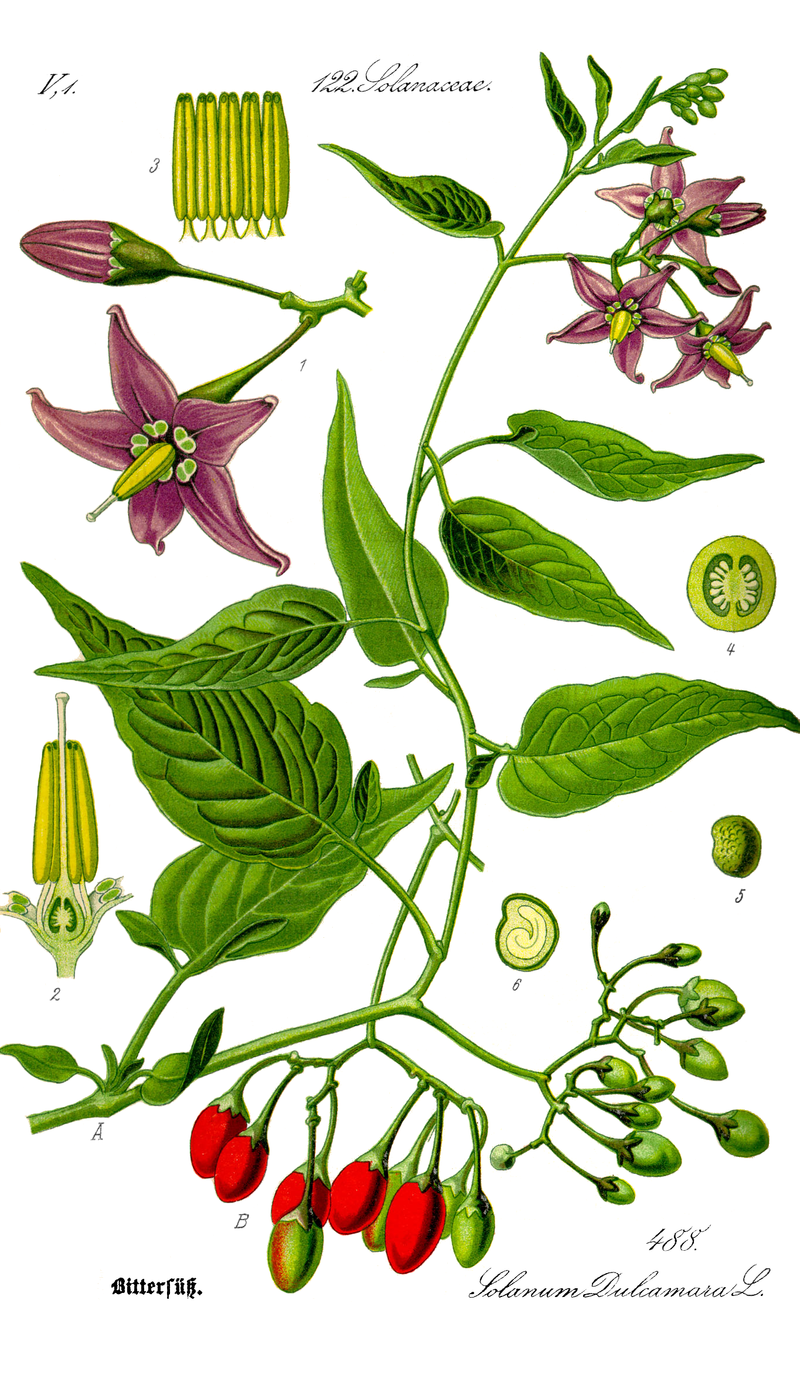
Hodgepodge 308/365 - Nightshade

This evening I finally got to meet a Flickr friend, Rachel, and her husband, Bob. They're in town for a meeting, and suggested we get together for dinner. And so we did, at our favorite restaurant, Passionfish, which was a hit. We chatted up a storm and had a lovely time. Even though I've "known" Rachel for probably ten years, it was mainly through our shared enthusiasm for photography. Tonight we got to fill in some stories and background. There was a surprising number of parallels in our trajectories. It was great getting to know them.

Bob can't eat gluten, so he asked what on the menu would be off limits. The server responded with a sheet outlining all the food allergies with respect to this week's menu: among the offenders, gluten, dairy, nuts, shellfish, and nightshade.

Nightshade reminded me of our friend Tom, who went through a diet regimen to determine what foods he is allergic to. Wheat came up, and dairy, but surprisingly, nightshade is an even worse choice for him: it gives him serious, debilitating headaches.

Illustration of Solanum dulcamara,
1.- Flower, 2.- Flower in longitudinal
section, without the petals;
3.- Androecium; 4.- Ovary, in
transverse section; 5.- Seed viewed
from above; 6.- Seed in transverse
section, note the curved embryo
surrounding the endosperm; A.- Branch
with leaves and flowers; B.- Stem
with immature and mature fruit
Nightshade, or the Solanaceae family, "ranges from annual and perennial herbs to vines, lianas, epiphytes, shrubs, and trees, and includes a number of important agricultural crops, medicinal plants, spices, weeds, and ornamentals. Many members of the family contain potent alkaloids, and some are highly toxic, but many, including tomatoes, potatoes, eggplant, bell/chili peppers, and tobacco are widely used" (Wikipedia). Tobacco! I had no idea. Petunias are also in the nightshade family.

Solanaceae comprises 98 genera and some 2,700 species (1,500–2,000 in Solanum alone, the genus that contains potatoes, tomatoes, and eggplant). It is present on all the continents except Antarctica, with the greatest diversity in South and Central America.

You say tomato . . .
Many of the species in this family are used for research into fundamental biological questions. Since 2003, for example, an international project bringing together scientists from fifteen nations has been seeking to understand how the same collection of genes and proteins can give rise to a group of organisms that are so morphologically and ecologically different. The project began with the sequencing of the tomato's genome.

Georgia O'Keeffe, Jimson Weed (1937)
The reason nightshades are on the Do Not Eat list for many people is the presence of various alkaloids: solanine, tropanes, nicotine, and capsaicin (the "hot" in a chili pepper). These compounds help protect the plant from herbivores and insects. Humans have used them as poisons, but they also have important pharmacological functions: think scopolamine patches for seasickness, atropine used to dilate the pupils during an eye exam or decrease saliva production during surgery, hyoscyamine to treat peptic ulcers. My friend Tom is probably highly sensitive to solanine, which has various symptoms if ingested in great quantities—gastrointestinal and neurological disorders, including stomach upset, hallucinations, and headaches. That said, shamans use datura (jimson weed) and mandrake precisely because of these toxins: hallucinations are what they want.

Me, I'm glad I can eat nightshades. I love pasta Bolognese, baingan bharta (Indian eggplant), chiles rellenos, scalloped potatoes. Or just plain ol' chips with salsa or baba ganoush. I'm not picky. And more to the point, not allergic. Thank goodness.

Friday, September 1, 2017

Hodgepodge 307/365 - Fingers

The last of my insect Band-Aids, alas
I sliced my thumb this evening, cutting down a piece of peeled ginger in preparation for mincing. It wasn't bad, just a flap of skin, with the attendant semi-massive blood loss. But it reminded me of a time waaaaaay back when David and I lived in San Diego—that would've been 1979, 1980. David was slicing onions, and suddenly he screamed, Aaaaaaaaagggggghhhhhhh! Serious blood loss was happening, and it wasn't just a flap of skin: he'd sliced the top of his left pinky entirely off! The blood-curdling scream was because onion juice on raw nerves. I still shudder just to think about it.

We tried to recall the next chain of events, but yeah: almost forty years ago, it's vague. We think we called the hospital, and they said he'd need a plastic surgeon—which somehow we found, even though it was evening. He was instructed to pack the detached piece of finger in a saline solution. And off we rushed.

At the surgeon's office, he took a look and said, "Yeah, I think I can save that." Six or eight tiny stitches later, David was good to go. The doc even lined up the fingerprints!

David now has a circular scar (a halo) on that finger, and less sensitivity than in the other fingertips. But since he's a guitarist, and that's his fret hand, it's excellent that that tip was saved.

It was a minor injury, thank goodness.

When it comes to finger injuries, I always think of elite climber Tommy Caldwell, who lost most of his left index finger in a construction accident. It didn't stop him, though. Not by a long shot.

And of course there's a list on the Internet of famous people who are missing fingers! Among them:
  • Jerry Garcia of the Grateful Dead: much of middle finger of pick-holding hand, lost in a wood-chopping accident
  • Darryl Hannah (actress): middle finger again, the victim of a pulley on her grandmother's well
  • Rahm Emmanuel (mayor of Chicago): middle finger again—a meat slicer ate it
  • Jesse James (outlaw), according to legend
  • James Doohan (Scotty on the original Star Trek): finger severed by one of six bullets that hit him on D-Day, Juno Beach, France
  • Boris Yeltsin: lost two fingers playing with a hand grenade as a child
  • Christian Bale (actor): mangled an index finger in a dirt bike accident
  • Telly Savalas (star of the 1970s TV series Kojak): index finger, whether from a WWII grenade or a rat gnawing on him as a child only he knows for sure
  • Buster Keaton: lost a finger in a clothes wringer at the age of 2
  • Danny Thomas (actor and comedian): blew off a finger in a gun accident
  • Frodo Baggins: had a finger torn off in Mordor by Gollum in the course of saving all of Middle Earth