Sunday, August 4, 2024

31 of 100: A successful search

I spent fifteen or so years on the search & rescue team of our local sheriff's office. Often we helped an injured person out of the wilderness (as in, Ventana Wilderness: the mountains south of Monterey). Sometimes we did body recoveries—people who committed suicide off Bixby Bridge, or drove over the side of Highway One. There were not a few searches for lost hikers. 

Here's a little story about one of those searches. I wrote it, potentially, as a part of an essay I'm working on about death; hence the various references to such. Unfortunately, I can't find the photo that goes with (I know it's in my files somewhere), so instead I've included a photo of me, at a training above the Bixby Bridge. I enjoyed those years.

When the call comes in the middle of the night (as usually happens) and we gather in the dark and hurtle down the coast to search for someone who’s gone missing—sometimes, they don’t end up dead. My favorite SAR story goes like that: four of us volunteers, two Steves, Alain, and me, showed up well into the evening at Pico Blanco Public Camp in the Ventana Wilderness of Big Sur, to search for a young man, an exchange student from Azerbaijan. He’d arrived in the U.S. only the week before, and since school wouldn’t start for another few days, his host suggested a camping trip.
      That first morning at camp, he’d woken up early and decided to hike to the top of the nearby peak, experience the sunrise. And then—he took the wrong way down. And continued down the north fork of the Little Sur River. Away from camp. Away from any people whatsoever.
      When we get a call for a search, past searches flash through my mind. Like the fisherman in this same fork of the Little Sur River, whom Alain found by, basically, stumbling over his upside-down rubber boot. Which was still cradling the man’s foot.
      Like Arvin, a slow hiker who simply disappeared—probably by tripping and falling down a steep hillside. Who knows? This country is rugged. It doesn’t divulge its secrets.
      You can’t help but set out on a search hoping for the best but expecting the worst.
      So here we were, Steve H. and me on the faint track of a trail up above the river out of Pico Blanco Camp, and Steve B. and Alain down by (or in) the river itself.
      All we could really do was call his name, Tengiz! We kept on, sweeping the land with our headlamps, calling: Tengiz! Tengiz! Calling, calling: Tengiz!
      We'd been at it a couple of hours when I heard the crackle of my radio. “We’ve got him! He’s okay!”
      Steve B. later told how, as he worked his way along the scrubby bank of the river, he was calling, and this shape, this body, came rushing down from a fire-hollowed redwood tree and threw its arms around him. Weeping with relief.
      I have a photo of Tengiz and Steve, their arms slung around each other, and a few others of us searchers, backed by our bright yellow Search & Rescue truck. Everyone is smiling. The biggest of smiles.
      That boy is now a man whom I follow desultorily on Facebook. Judging from his random posts, he likes music and soccer. He lived in Turkey for a while, spent some time making candles in Geneva. Presently he's in Moscow.
      I wonder how he thinks of his year in California. Of which this adventure was just the start.


Saturday, August 3, 2024

Book Report: Martyr!

13. Kaveh Akbar, Martyr! (2024) (8/1/24)

A writer friend of mine raved about this book on Facebook—a couple of times. The second time, I thought: I obviously need to order it. Which of course I did. And it happened to arrive just as I was finishing my last book, which I wouldn't call a schlocky thriller exactly, but it also wasn't straight "literature." Which this seemed to be. So I figured I'd elevate myself.

And, wow. The author is a 35-year-old Iranian American poet mostly, but now: yep, he's a novelist, boy and how. This story centers on 20-something Cyrus Sham, a recent college graduate in Indiana—and an alcoholic/addict in recovery now for two years. The main establishing details are that he's lost both his parents: his mother in an incident when US armed forces shot down the plane she was flying in "by mistake," when he was very young; and his father, who then emigrated from Iran to the US and found a career working in a high-tech chicken farm, and who died of a stroke once Cyrus was on his own.

Cyrus is depressed, looking for meaning in life. He begins increasingly to see such meaning in martyrdom—in dying a deliberate death—and he's collecting quotes and stories and writing about it. A friend of his mentions an artist who is herself dying, and is using her last weeks to talk to people, having reserved a gallery at the Brooklyn Museum for her final work of art, Death-Speak. She, too, happens to be Iranian. Her name is Orkideh.

The novel itself jumps around in time, and it has various narrators, including Cyrus's father, Ali, and mother, Roya. There are exquisite dream sequences, featuring, for example, Kareem Abdul-Jabbar and Cyrus's imaginary brother, Beethoven Shams; or Orkideh and President Invective (i.e., essentially, Trump); or Ali Shams and Rumi. 

But perhaps the most through-line chapters are those devoted to Cyrus's mother, Roya—going back in time; and Cyrus's visits to the Brooklyn Museum to talk to the dying artist, about what it means to die, or maybe live—in the present.

I quoted some of the writing here and here. My book is bristling with flags, there are so many beautiful and meaningful passages. Like this, from a self-written obituary:

When the world was flat, people leapt off all the time. There is nothing remarkable about dying this way, but I hope I've made something interesting of my living. An alphabet, like a life, is a finite set of shapes. With it, one can produce almost anything.

Or this:

What distinguishes grace from everything else: grace is unearned. If you've moved through the world in such a way as to feel you've earned cosmic compensation, then what you've earned is something more like justice, like propriety. Not grace. Propriety is correct. Justice is just. There's an inescapable transactional quality: perform x good, receive y reward. Goodness never enters the equation.

(Whenever I think of grace, I think of hiking in the Berkeley hills, just nearing the parking lot, and hearing this gloriously pure saxophone music: a gift that carried me on. "Unearned" and transcendent.)

It ends up being, in part, a book of philosophy, of investigation, of discovery. Which I love.

And so the last chapter and then the Coda, which in the first instance was outright hallucinatory, and in the second highlighted a secondary character twenty years in the past—well, I won't say I wanted things to be wrapped up, because I didn't. But I find myself still puzzling over their meanings. 

Which—maybe that's life?

In any case, I loved this book. I may have to read the last few chapters again, but that's no burden. (I may want to read the entire thing again, but ditto.) And now: I'm going to leap into Lonesome Dove—for something completely different.


Friday, August 2, 2024

30 of 100: "Overlooked": NYT obituaries

I was searching for information about the Iranian poet Forough Farrokhzad, who is mentioned in Martyr!, and came across a New York Times obituary from 2019—and yet, she died in 1967. A header to the obit states: "Since 1851, obituaries in The New York Times have been dominated by white men. With Overlooked, we’re adding the stories of remarkable people whose deaths went unreported in The Times."

This regular feature—it appears every week—was launched in March 2018. As that opening article stated, 

The New York Times has published thousands of obituaries: of heads of state, opera singers, the inventor of Stove Top stuffing and the namer of the Slinky. The vast majority chronicled the lives of men, mostly white ones. 

Charlotte Brontë wrote “Jane Eyre”; Emily Warren Roebling oversaw construction of the Brooklyn Bridge when her husband fell ill; Madhubala transfixed Bollywood; Ida B. Wells campaigned against lynching. Yet all of their deaths went unremarked in our pages, until now.

Indeed, "Overlooked" is a stunning chronicle of lives lived—of history and accomplishment. It includes individuals whose names I know—in addition to Charlotte Brontë, for example, there's Diane Arbus, Beatrix Potter, Sylvia Plath, and Henrietta Lacks—but so many more I've just spent a fascinated few hours learning about, from many times and places. Mostly women, but also men; many white, but more often not.

And rather than simply obituaries, they are often commentaries on society at the time: the gift of hindsight. The entry for Margaret Abbott, for example, the first American woman to win an Olympic championship, in 1900 in Paris (and who died not knowing it), is a nice little history lesson on the Games. And that for Ada Lovelace, now recognized as "the first computer programmer," has all of computer history to situate her in, which would not have been the case in 1852 when she died. (She was only rediscovered in the mid-20th century.)

Anyway, I will not list all the remarkable people who are finally given their due. I just wanted to mention "Overlooked" here as a way of keeping it in mind for myself, with a link to go see who I should know about this week. (This week, it's Willy de Bruyn [1914–1989], a Belgian cyclist who broke records as a woman but who in his early twenties transitioned to being a man, giving up athletics and all but disappearing from view.)

Thursday, August 1, 2024

29 of 100: Black stone, white stone: poems

Today was my weekly poetry group—a half-dozen-plus of us, who meet on Zoom and read some themed poems together, then write for half an hour, and finally share what we've written. All of these people are well published; one is even former poet laureate of Wisconsin. Me, I stumble along. And I always learn something. And the actual poets are always very kind to me.

Today's prompt featured the Peruvian César Vallejo (1892–1938) and his poem 

Piedra negra sobra una piedra blanca

Me moriré en París con aguacero,
un día del cual tengo ya el recuerdo.
Me moriré en París y no me corro
tal vez un jueves, como es hoy, de otoño.

Jueves será, porque hoy, jueves, que proso
estos versos, los húmeros me he puesto
a la mala y, jamás como hoy, me he vuelto,
con todo mi camino, a verme solo.

César Vallejo ha muerto, le pegaban
todos sin que él les haga nada;
le daban duro con un palo y duro

también con una soga; son testigos
los días jueves y los huesos húmeros,
la soledad, la lluvia, los caminos . . .

Karla Huston, who presented the prompt today (she's the poet laureate), included these notes:

Written several years before his death, this sonnet just about got it right. Vallejo did die in Paris in a heavy rain, but not quite Thursday. Friday it was, Good Friday; spring, not fall.

The stones of the title recall a Peruvian practice of memorializing a fortunate event with a white stone, an unfortunate one with a black. The mood is an occluded Parisian gray, the speaker resignedly "prosing" his verse, turning his cheek while being cheeky, pointing fingers at others and himself, beyond yet caught in a confusion of tenses where the future is already present as a memory.
Here are two translations, the second one the most literal, the first the best known: 

Black Stone Lying on a White Stone

Translated by Robert Bly and John Knoepfle

I will die in Paris, on a rainy day,
on some day I can already remember.
I will die in Paris—and I don't step aside—
perhaps on a Thursday, as today is Thursday, in autumn.

It will be a Thursday, because today, Thursday, setting down
these lines, I have put my upper arm bones on
wrong, and never so much as today have I found myself
with all the road ahead of me, alone.

Cesar Vallejo is dead. Everyone beat him,
although he never does anything to them;
they beat him hard with a stick and hard also

with a rope. These are the witnesses:
the Thursdays, and the bones of my arms,
the solitude, and the rain, and the roads.

Black Stone Lying on a White Stone

Translated by Ravi Kopra

I will die in Paris on a day of heavy rains,
A day I already have the memory of.
I will die in Paris—it doesn't depress me—
Perhaps on a Thursday in fall like today.

It'll be Thursday because today's Thursday.
My arms hurt bad as I write verses today.
Never before in all my life have I
Felt so lonely as I feel today.

Cesar Vallejo's dead. They keep on
hitting him even though he harmed no one.
They hit him hard with a stick, very hard.

Also with a rope; his witness are the
Thursdays, the bones of his arms,
the loneliness, the roads and the rain . . .

And a few imitations:

Imitation of Immortality

Matt Morris

Maybe you already died, January, in the snow
of years. Remember your egg-shell Plymouth, its post-
ignition issues & bad brakes, skidding, flipping,
rolling over & over to the foot of the hill? No doubt

laundry day, like today, & you, like your laundry—
the shit-scorched shorts, lucky tube
socks & t-shirt from the Mystery Hole—turning, violently
turning, the profane world in spin cycle. Maybe

this is death—another string plucked
on a gaudy golden harp as you light
on all fours & go on, snow ever
falling, treacherous ice patch far
behind, laundromat open all night.

Here's one by Karla herself:

Variations on a Text

I will die at my kitchen table on a fidgety day.
I will finger a cigarette, stare down
the dregs in a glass of red wine.
Between puffs, the sky coughs a lung
full of rain and god’s hand pokes through,
wags a smoky finger at my transgressions.
It will be a day someone might remember.

This will be a Tuesday, the sun trying
to come out, wind sighing anxiously in the trees.
Mourning releases a new page, a rattling song,
thin as the light behind my eyes, sad
as the skin over my knuckles.
A dog shivers, violets clench their roots.

All the poets are dead, their words used up
like coins flipped in a gritty gutter.
Once the sun shone on the sea, on lilac eyes,
waves moving the street like soot.
Cars bleep their exhaustive voices.
Fire comes as witness,
fingers writing with ash.

And finally, another variation by yet another member of our group, Ruth Bavetta:

Black, White

                homage to César Vallejo

He died, my father,
in Auburn, on a Wednesday
in January, with the blankets thin
and white as his bones, unable
to turn to the fourth floor window,
unable to see the freezing clouds.

He died, my father,
after he could not swallow the sweetness
of the pears, after refusing
the yellow pill and the green one,
after the priest he did not want
came anyway.

He died, and he lies
high on Mill Peak,
black ash, white snow.


Wednesday, July 31, 2024

28 of 100: Negargari (نگارگری)

Still reading Martyr!, which still is delighting me. Just now, a dream sequence featuring the narrator Cyrus's father and the poet Jalal al-Din Muhammad, aka Rumi, "a gorgeous man in orange and purple silk robes taking a deep drag of a blunt. The man had high, supermodel cheekbones and a long black beard the color of deep night with little braids woven into it, a few decorated with tiny shells and beads." Rumi! How cool! As the two men talk the father "noticed suddenly that Rumi's arms were covered with colorful tattoos depicting negargari, little illuminated Byzantine miniatures, and the figures, some on horseback, some firing bows, were moving all around, playing out their little lives across Rumi's skin."

Well, of course I had to look that up, and when I saw some examples I remembered negargari (نگارگری) that I have seen in person in museums and always found so appealing. Wikipedia tells me they are intended to be kept in an album of such works called a muraqqa, which gives them a sort of privacy and curatorial consistency. The genre became "significant in Persian art in the 13th century, receiving Chinese influence after the Mongol conquests," and reached a highpoint in the 15th and 16th centuries. The pigments used are mostly mineral-based, which gives them a bright, pure coloring. Many figures are often depicted, with great attention paid to the background; animals are also widely featured. The Wiki article has much more detail on contents, styles, and trends. Here are a few examples (click to see large on black):

Saki, by Reza Abbasi, 1609

A complex palace scene by Mir Sayyid Ali, c. 1540

Ibn Bakhtishu's Manafi al-Hayawan (Uses of Animals),
1297–99

Yusuf and Zulaikha (Joseph chased by
Potiphar's wife), by Behzād, 1488

Camp scene: Majnun (at top wearing 
orange) spies on his beloved Layla
(standing in tent doorway), c. 1556–65

The Baysonghor Shahnameh, 1430:
Faramarz, son of Rostam, mourns the death
of his father and of his uncle Zavareh

Bahram Gur kills the dragon, 
in a Shahnameh of 1371, Shiraz

Khusraw discovers Shirin bathing in a pool
(a favorite scene), 1548

Illustration from One Thousand
and One Nights by Sani ol molk, 1853


Tuesday, July 30, 2024

27 of 100: Albrecht Dürer, artist

Back in January 2020 I featured Albrecht Dürer as (surprise!) a watercolorist. Today I'm posting some other of his works—because I've been running across him in a job I'm working on, about drawing and printmaking: the catalogue for an exhibit coming soon to the Getty Museum and the Art Institute of Chicago. And it reminds me how thoroughly I enjoy his art, this man who lived from 1471 to 1528 and yet feels so contemporary. First, some self-portraits:

At age 26

A detail

At age 13

The earliest painted self-portrait, age 22

At age 28

A sick Dürer, age 40-ish

And some random other works (he was prolific and eclectic, in all sorts of mediums):

Praying Hands, c. 1508

Melencolia I, 1514

Rhinoceros, 1515

The Northern Hemisphere of 
the Celestial Globe, 1515

St. Jerome in His Study, 1521

St. Christopher, 1521

Four Horsemen of the Apocalypse, 1498

Coat of arms, 1523

I could go on and on, but maybe I'll save more for another day when I feel like revisiting Herr Dürer. 


Monday, July 29, 2024

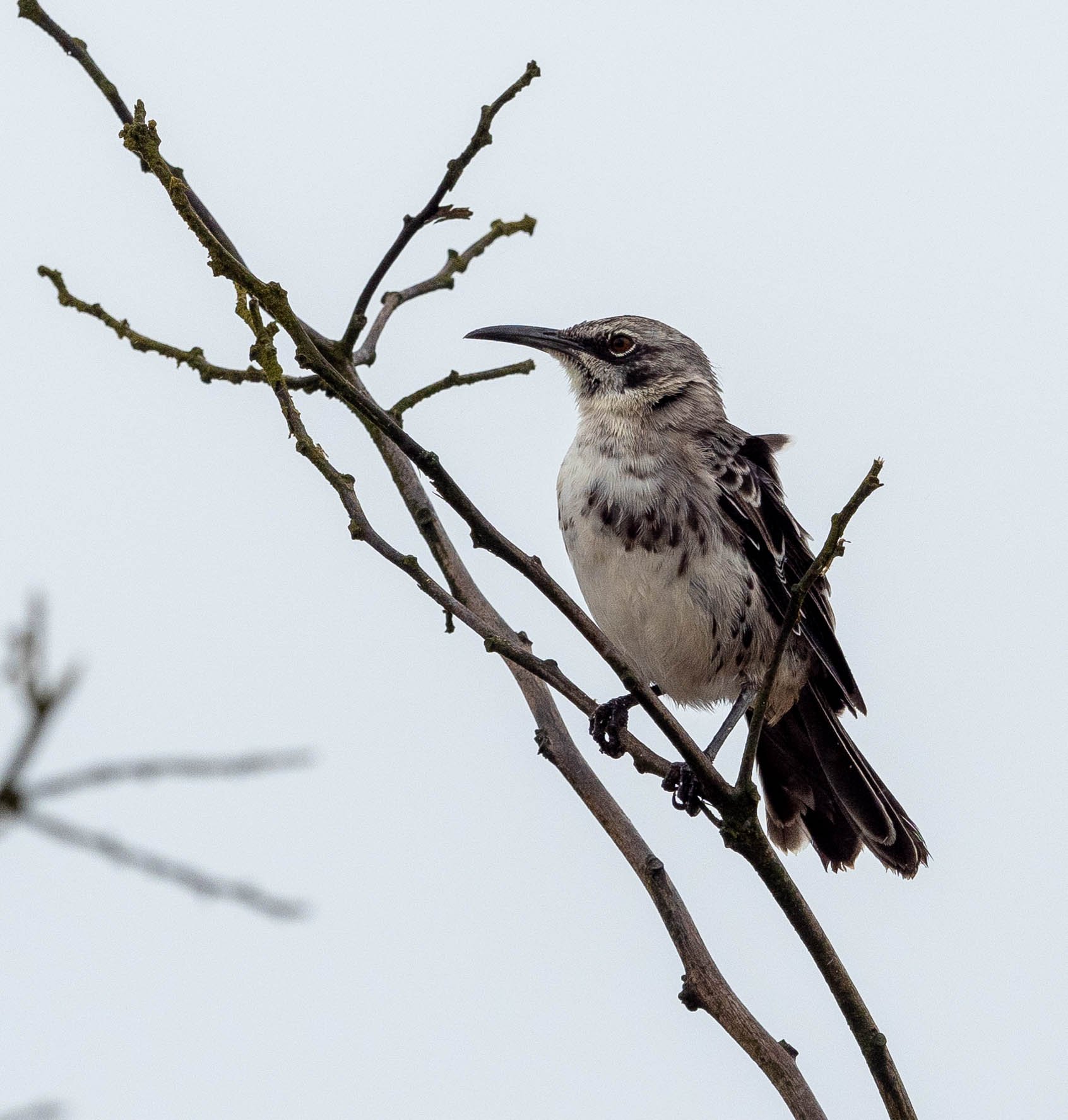
26 of 100: Some Galápagos birds

Two years ago last month, we finally acted on the dream of visiting the Galápagos Islands, spending two weeks on the Samba, captained by the island native Juan Carlos Salcedo. Each day we would visit a different island; we would snorkel; we ate great food. The whole trip was amazing. 

But of course, it was the wildlife that was most amazing. Completely unwary, they just let you walk right up to them. Which allows for some pretty spectacular photos. Here are some I took, from a couple of the islands, Genovesa and Española, of birds. Maybe another day I'll post a few shots of mammals and reptiles.

Red-footed booby

Pigeon

Española mockingbird

Blue-footed booby with chicks

Waved albatross

Yellow-crowned night heron

Immature frigatebird

Female (and male) frigatebird

Yellow-crowned night heron

Swallow-tailed gull

Male frigatebird

Immature frigatebird

Red-footed booby

Nazca booby

Blue-footed booby