Friday, June 5, 2015

365 True Things: 69/Other

I've just finished proofreading an excellent book about the Mexico-U.S. border and those who each year, in the hundreds of thousands, often multiple times, risk everything—including their very lives—to cross it. Many of them were deported from this country for misdemeanors, and they want only to return to homes they've maintained for years or even decades, and to their children and loved ones. They do menial labor here, but it's better than the poverty they left behind. They are honest and hard-working. They do necessary jobs that "real Americans" don't want to do, at least not for the pay they get.

I won't go into my thoughts on the immigration debacle of this country. What I do want to say is that I was struck by an observation in this book by anthropologist Michael Jackson (referring to the practice of anthropology/ethnography): "If we are to avoid the trap of becoming infatuated with our own intellectual-cum-magical capacity to render the world intelligible, then the vocabulary 'we' all too glibly project onto 'them' must be tested continually against the various and changing experiences of actual lives" (The Wherewithal of Life: Ethics, Migration, and the Question of Well-Being, 2013).

I've been thinking about this us vs. them dichotomy, and how easy it can be to "other" people—usually, I believe, out of ignorance or fear, or just different life experiences; though in many cases, unfortunately—sadly—it's out of outright arrogance. And how we would all be so much better off if we all practiced more compassion and did our best to understand that we're all people with specific dreams, goals, sorrows, pains, desires, needs, fears. That is, we all live actual lives, and—I like to believe‐for the most part, do our best. But "othering" is easier. It's the lazy way.

(Then again, I am pretty happy to "other" the arrogant, insensitive ones. So what does that say?)

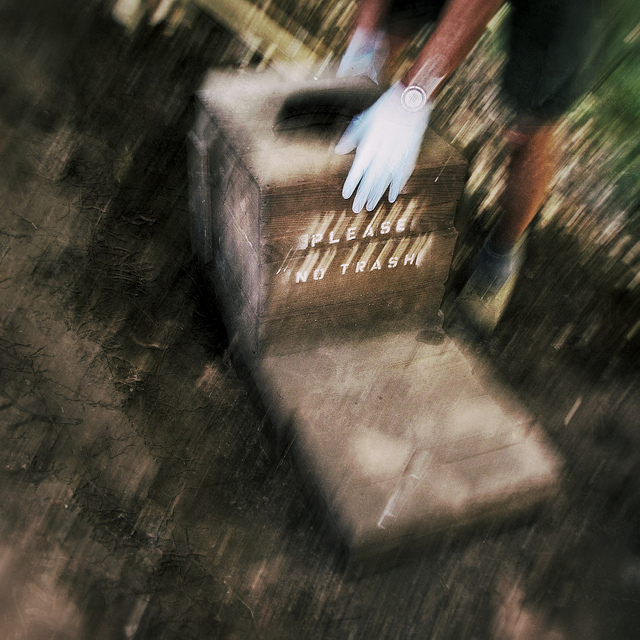
This is a heady subject, but since I'm trying to illustrate this blog, I gamely googled "other." And who did I find but my old friends, the star-bellied sneetches! I loved this book when I was a kid. One of my father's nicknames for me was Sneetch. I'm sure back then I didn't really "get" that it was about othering. But now I do. (Which makes me wonder about that nickname, but I probably shouldn't go there.) And so, for your reading pleasure, here is the full text. (You can also watch an animated version of it here.)

"The Sneetches"
by Dr. Seuss

Now, the Star-Belly Sneetches
Had bellies with stars.
The Plain-Belly Sneetches
Had none upon thars.

Those stars weren't so big.  They were really so small
You might think such a thing wouldn't matter at all.

But, because they had stars, all the Star-Belly Sneetches
Would brag, "We're the best kind of Sneetch on the Beaches."
With their snoots in the air, they would sniff and they'd snort
"We'll have nothing to do with the Plain-Belly sort!"
And whenever they met some, when they were out walking,
They'd hike right on past them without even talking.

When the Star-Belly children went out to play ball,
Could a Plain-Belly get in the game... ? Not at all.
You only could play if your bellies had stars.
And the Plain-Belly children had none upon thars.

When the Star-Belly Sneetches had frankfurter roasts
Or picnics or parties or marshmallow toasts,
They never invited the Plain-Belly Sneetches.
They left them out cold, in the dark of the beaches.
They kept them away.  Never let them come near.
And that's how they treated them year after year.

Then ONE day, it seems... while the Plain-Belly Sneetches
Were moping and doping alone on the beaches,
Just sitting there wishing their bellies had stars... 
A stranger zipped up in the strangest of cars!

"My friends," he announced in a voice clear and keen,
"My name is Sylvester McMonkey McBean.
And I've heard of your troubles.  I've heard you're unhappy.
But I can fix that.  I'm the Fix-it-Up Chappie.
I've come here to help you.  I have what you need.
And my prices are low.  And I work at great speed.
And my work is one hundred percent guaranteed!"

Then, quickly Sylvester McMonkey McBean
Put together a very peculiar machine.
And he said, "You want stars like a Star-Belly Sneetch... ?
My friends, you can have them for three dollars each!"

"Just pay me your money and hop right aboard!"
So they clambered inside.  Then the big machine roared
And it klonked.  And it bonked.  And it jerked.  And it berked.
And it bopped them about. But the thing really worked!
When the Plain-Belly Sneetches popped out, they had stars!
They actually did.  They had stars upon thars!

Then they yelled at the ones who had stars at the start,
"We're exactly like you! You can't tell us apart.
We're all just the same, now, you snooty old smarties!
And now we can go to your frankfurter parties."

"Good grief!" groaned the ones who had stars at the first.
"We're still the best Sneetches and they are the worst.
But, now, how in the world will we know," they all frowned,
"If which kind is what, or the other way round?"

Then up came McBean with a very sly wink
And he said, "Things are not quite as bad as you think.
So you don't know who's who. That is perfectly true.
But come with me, friends.  Do you know what I'll do?
I'll make you, again, the best Sneetches on the beaches
And all it will cost you is ten dollars eaches."

"Belly stars are no longer in style," said McBean.
"What you need is a trip through my Star-Off Machine.
This wondrous contraption will take off your stars
So you won't look like Sneetches who have them on thars."
And that handy machine
Working very precisely
Removed all the stars from their tummies quite nicely.

Then, with snoots in the air, they paraded about
And they opened their beaks and they let out a shout,
"We know who is who! Now there isn't a doubt.
The best kind of Sneetches are Sneetches without!"

Then, of course, those with stars got frightfully mad.
To be wearing a star now was frightfully bad.
Then, of course, old Sylvester McMonkey McBean
Invited them into his Star-Off Machine.

Then, of course from THEN on, as you probably guess,
Things really got into a horrible mess.

All the rest of that day, on those wild screaming beaches,
The Fix-it-Up Chappie kept fixing up Sneetches.
Off again!  On again!
In again! Out again!
Through the machines they raced round and about again,
Changing their stars every minute or two.
They kept paying money.  They kept running through
Until neither the Plain nor the Star-Bellies knew
Whether this one was that one... or that one was this one
Or which one was what one... or what one was who.

Then, when every last cent
Of their money was spent,
The Fix-it-Up Chappie packed up
And he went.

And he laughed as he drove
In his car up the beach,
"They never will learn.
No. You can't teach a Sneetch!"

But McBean was quite wrong.  I'm quite happy to say
That the Sneetches got really quite smart on that day,
The day they decided that Sneetches are Sneetches
And no kind of Sneetch is the best on the beaches.
That day, all the Sneetches forgot about stars
And whether they had one, or not, upon thars. 

Thursday, June 4, 2015

365 True Things: 68/Movies


I like going to the movies. I like the big screen. I like the big sound. Certain movies really need to be on the big screen. Don't you think?

But I do not like going when everyone else goes. I always choose a weekday matinee. For one thing, it's cheaper. For another, you might have to put up with only three or four other popcorn crunchers. On the rarest of occasions, like after a movie has played awhile but is not quite in its last week, I am the only person in the theater. That, I love.

I do not buy movie theater food. It's a ripoff, and not good for you. I go for the movie alone.

Today, I saw Mad Max: Fury Road. You who know me might consider that an odd choice. And I suppose it is. But I liked the Mel Gibson movies back in the day, their wildness, and I was intrigued by Anthony Lane's review in the New Yorker of this newest installment. I usually trust Anthony Lane (except when it comes to comedy). And now, after having seen the movie, I've reread the review and I think it's right on.

Partway through the movie there is a snatch of, I think it was Wagner. And I was jolted: Yes, this movie is operatic! The story line is so simple, but so much happens, with so much drama—and so much feeling. And the bad guys are really really awfully evilly bad. So the good guys really have to win. And they do.

That's my kind of opera.

Or, on this occasion, movie.

Wednesday, June 3, 2015

365 True Things: 67/Sauna

When I was fifteen, I spent a month visiting a schoolmate in Finland. She lived with her parents and two sisters in Helsinki, where we spent most of the month, but we also ventured out into the countryside to visit her grandparents, who had a farmstead on a small lake. I'm looking at a map, and various place-names look familiar to me—Savonlinna, Lahti, Kouvola, Kuopio, Häämenlinna—so I can't tell you now just where they lived. All I remember is a beautiful big red farmhouse and . . . the sauna.


Mostly,
the sauna.


I'd never experienced a sauna before, and this was the real deal: wood-fired, in a small building right on the lake, with a long, narrow dock by which to access the water. It looked very much like the picture here, though this isn't it. (The dock, for one thing was longer. At least in my memory.)

My friend, Raili, and I would regularly fire up the sauna—it was wood-burning, not electric like the ones in town. Once it was hot—80–110 °C (175–230 °F)—you'd toss water on the rocks atop the kiuas, the special sauna stove, to produce wet steam (which has its own word in Finnish, löyly—and by "own word," I mean it means only the wet steam produced in the sauna, not just wet steam in general). In the photo here, the bucket holds the water that you'd toss on the kiuas with the wooden ladle. And then there was the vasta, a bundle of dried birch twigs that we'd slap ourselves and each other with. It would get wet and supple, and it was a stimulating treat for the skin. (Really!)

But the best part was, when you got so hot you couldn't stand it anymore, bursting out the door and running down the dock full tilt to execute a long dive at the last possible moment into the cold, cold lake. Then turning around and swimming back as fast as possible, because—I mentioned cold, right?

And then, back into the sauna.

Over and over again.

A naked experience like no other.

(I did mention the naked part?)

A friend today was talking about a local hot springs establishment where you progress from the ice-cold pool to a medium-cold pool to a warm one, and around and around. That reminded me of that glorious sauna.

One of the very few phrases I ever learned in Finnish was this: Sauna oli íhana—The sauna was wonderful—which I said to Raili's grandparents after my first encounter with this delicious tradition. Their blue eyes crinkled in pleasure. They knew exactly what I meant, even if my pronunciation was lousy.


Tuesday, June 2, 2015

365 True Things: 66/Backpacking

I have not done a whole lot of backpacking. The odd overnight trip, a few two- or three-day trips. And that anomaly: the four-week attempt on Denali, when, yes, I was backpacking and, for me, carrying a pretty heavy load.

Still, for some reason I keep being nagged by the idea of hiking the John Muir Trail in the Sierra Nevada of California. And by "hiking," I do mean backpacking, since it's 210 miles long—starting at Happy Isles in Yosemite Valley and ending on the summit of Mt. Whitney, at 14,494 feet the highest spot in the lower 48—plus 12 or so miles to get back to civilization. Most people take about three weeks to traverse its length. It is no walk in the park.

This evening I went to a talk at REI by a youngish couple who hiked the JMT last July and August. They loved it! Even though the weather was miserable—rain, sleet, hail, thunderstorms, snow. Still, they loved it.

They showed photos—oh my, that high Sierra, be still my heart!—and talked about gear and permits and getting information on the trail and staying warm and keeping your tummy happy.

That last bit involves resupplies—sending packages of food to yourself at a few easily accessible junctures along the trail.

For some reason, resupplies make me nervous. More nervous than the 46,000 feet of climbing and 38,000 feet of descending do. Those, I know I can do. (Or have been able to so far. . . .  Though I also know I'm not getting any younger.)


Like, how do you really know what you'll need, or (more to the point) can carry, in the way of food? Or just when? What if you send the wrong stuff? Or not enough? Though apparently at the resupply stations there is barrel after barrel after barrel (of the laundry soap size) of free food: supplies that people have "donated" because they sent too much to themselves or they were quitting the trek or they were just sick sick sick of top ramen.

(I got sick sick sick of oatmeal on Denali, but there were no barrels there to trade it out for something better, sadly.)

Anyway. I am now encouraged to read the book on the JMT to try to create a better mental map, and start weighing equipment choices: because literally, each ounce counts. And maybe this year I will apply for a permit for next year to hike that trail. I'm thinking solo. But if any of you wants to join me, I know I'd welcome the company.

(JMT map courtesy of John J. Czaplewski; photo of Marie Lakes courtesy of Kevin; elevation profile courtesy of the Pacific Crest Trail Assocation.)


Monday, June 1, 2015

365 True Things: 65/Reading

Wall of books from "before" house: many of these are still in boxes . . .


You’d think, considering how many books I have, I would spend more time reading for pleasure. I tell myself I will. I have a whole stack of books all picked out. (Well, several stacks.) Short stories, new novels, research for a writing project, books on the craft of writing, poetry, natural history. But somehow, it doesn’t happen. At least, not often enough.

I explain it’s because I read for a living. Right now, I’m editing a manuscript about Charles Mingus and proofreading a book called Land of the Open Graves about people crossing the border from Mexico into the United States across the Sonoran Desert. I’m switching off, because proofreading is less taxing than editing. I still have to pay attention, but I don’t have to worry whether the language can be improved, just whether it’s correct. So this evening, yes, I am reading.

When I do work-work and I feel moved to read for pleasure, I invariably pick up a shlocky mystery. Pure escapist nonsense. Though this proofread is giving me more than enough death. Real, tragic death.

And I have a deadline: in twelve days I’m getting on a plane, and these jobs have to be done. So: no pleasure reading for me until that happens. And then—well, I typically don't get much reading done when I travel, though I will (optimistically) take my Kindle.

But once I get back home? Yeah, I'm going to put "read for pleasure" on my list. And then, do it.

Sunday, May 31, 2015

365 True Things: 64/Dessert

I am not a chocoholic. When it comes to dessert, my favorites are bread or rice pudding (with raisins and rum, yum); plain cheesecake; carrot cake (I love cream cheese frosting, so plenty of that); French vanilla ice cream with fresh raspberries and/or blueberries; Ben & Jerry's Vanilla Caramel Fudge and Triple Caramel Chunk; and cherry pie. My favorite of favorites, though, is rhubarb pretty-much-anything. Here's a recipe for rhubarb crisp by Mark Bittman:

Ingredients

  • 6 tablespoons cold butter, cut into small pieces, plus more for greasing pan
  • 2 ½ to 3 pounds rhubarb, trimmed, tough strings removed, and cut into 1 1/2-inch pieces (about 5 to 6 cups)
  • ¼ cup white sugar
  • 1 tablespoon orange or lemon juice
  • 1 teaspoon orange or lemon zest
  • ¾ cup brown sugar
  • ½ cup all-purpose flour
  • ½ teaspoon cinnamon, or to taste
  • Pinch salt
  • ½ cup rolled oats
  • ½ cup pecans

Preparation

  1. Heat oven to 375 degrees. Grease an 8- or 9-inch square nonmetal baking or gratin dish with a little butter. Toss rhubarb with white sugar, orange or lemon juice and zest, and spread in baking dish.
  2. Put the 6 tablespoons butter in a food processor along with brown sugar, flour, cinnamon, and salt and pulse for about 20 or 30 seconds, until it looks like small peas and just begins to clump together. Add oats and pecans and pulse just a few times to combine.
  3. Crumble the topping over the rhubarb and bake until golden and beginning to brown, 45 to 50 minutes.
See: I can do short. Short but sweet!
 

Saturday, May 30, 2015

365 True Things: 63/Work (VWA)

In previous posts (#s 19 and 26) I have written about working as a Volunteer Wilderness Ranger (VWR) with the Ventana Wilderness Alliance (VWA), in a partnership with the U.S. Forest Service (we wear USFS uniforms). To quote from their website, the VWA is "a grass-roots organization whose mission is to protect, preserve, and restore the wilderness qualities and biodiversity of the public lands within California's northern Santa Lucia Mountains and Big Sur coast."

Today was the annual VWA membership gathering, and for the first time since I joined I was able to attend. It was a friendly group of a hundred fifty or so, sharing a potluck lunch and catching up. Recent accomplishments were outlined during the speechifying: the many miles of disappeared trail (usually as a result of forest fires) restored, the two-year saga of replacing decripit or installing brand-new wilderness toilets in the most impacted camps, and—probably most important—the latest achievements of the Youth in Wilderness program, inspiring young people's passion for and commitment to the backcountry.

I discovered the VWA via their fantastic on-line trail conditions reports. I had gone on a Search & Rescue mission and we ended up on Miller Canyon Trail, which—well, to call it a trail was a stretch of the imagination. Finally we stopped to look at a map and realized we were in totally the wrong place! No wonder we weren't making the progress we expected! It was not a high point in our experience as SAR "professionals."

A couple of weeks before, my friend Steve (in both SAR and VWA) had told me he'd flagged Miller Canyon. Those flags were all that kept us moving forward that long, exhausting night.

Afterward, I checked the VWA trail reports and learned that, indeed, no less than Steve had deemed the trail "impassable (completely overgrown or tread obliterated)." I added my own report on the website:
A team of six members of Monterey County Search and Rescue hiked this trail from the end of Jeffery Road approximately 3.75 miles toward Miller Canyon Camp, beginning at 8 p.m. Thursday, August 30, transporting a heavy wheeled Stokes litter for a potential rescue of a patient (at Hiding Canyon Camp--why we were using this trail is a story unto itself). We found the flagging to be relatively straightforward to follow, easily picked up with our headlamps. The trail varied from being clear, with obvious tread, to areas of steep, soft drop-off; in some spots the trail turned and we continued straight, but we knew to keep looking for the flagging, so we never ventured too far before turning back and rediscovering the trail. At a certain point the slope was so steep and the trail so loose and narrow that we broke apart our litter rig and carried it on our backs. I am guessing we did not get beyond Nason Cabin; in any case, we never got to an area with very thick brush or face-high poison oak [as was described by a previous trail conditions report]. We've searched before for people who've gotten lost on this trail (mainly by venturing down into the creek rather than staying high up the slope), and now we understand just how easy it is to get lost. Steve B's flagging was invaluable--though by the end of our trek we were cursing him for making us think there actually was a trail to follow. All in all, it took us 8 hours to hike approximately 7.5 miles.
I then wrote out a check for the VWA and stuck it in the mail, thanking them for the excellent information they provide.

Two days later, who should I get a call from but . . . the VWA! Inviting me to become more involved. (I pictured the leaders, Mike and Rich, in the office: "Look at this! We've got a live one!") Shortly thereafter, Steve suggested I become a VWR. Ever since then, I have been happily venturing into the wilderness every so often to do trail work, campground cleanup, fire-ring repairs, dead tree removal, wilderness toilet replacement. We chat with visitors about Leave No Trace principles, and recently launched a new program speaking with backpackers at the trailhead of the heavily used Pine Ridge Trail. It's rewarding—and if you like hard work, fun.

Today at the gathering, we were recognized by the USFS for our efforts, in the form of lapel pins. We had a choice, and I went for this "woodsy owl." It's nice to be acknowledged. (Though I was a little disappointed that, instead of "Lend a Hand," it didn't say, "Give a Hoot.") Mostly, it's good to be part of such an active, passionate organization and to know that I'm making a difference.


With ever decreasing federal funding for stewardship and management of the vast public lands of this country, more and more of these alliances are popping up. Wherever you live, I bet you've got at least one or two, if not more, such grass-roots organizations that you can get involved in. It's worth it. And . . . we need all the help we can get.